
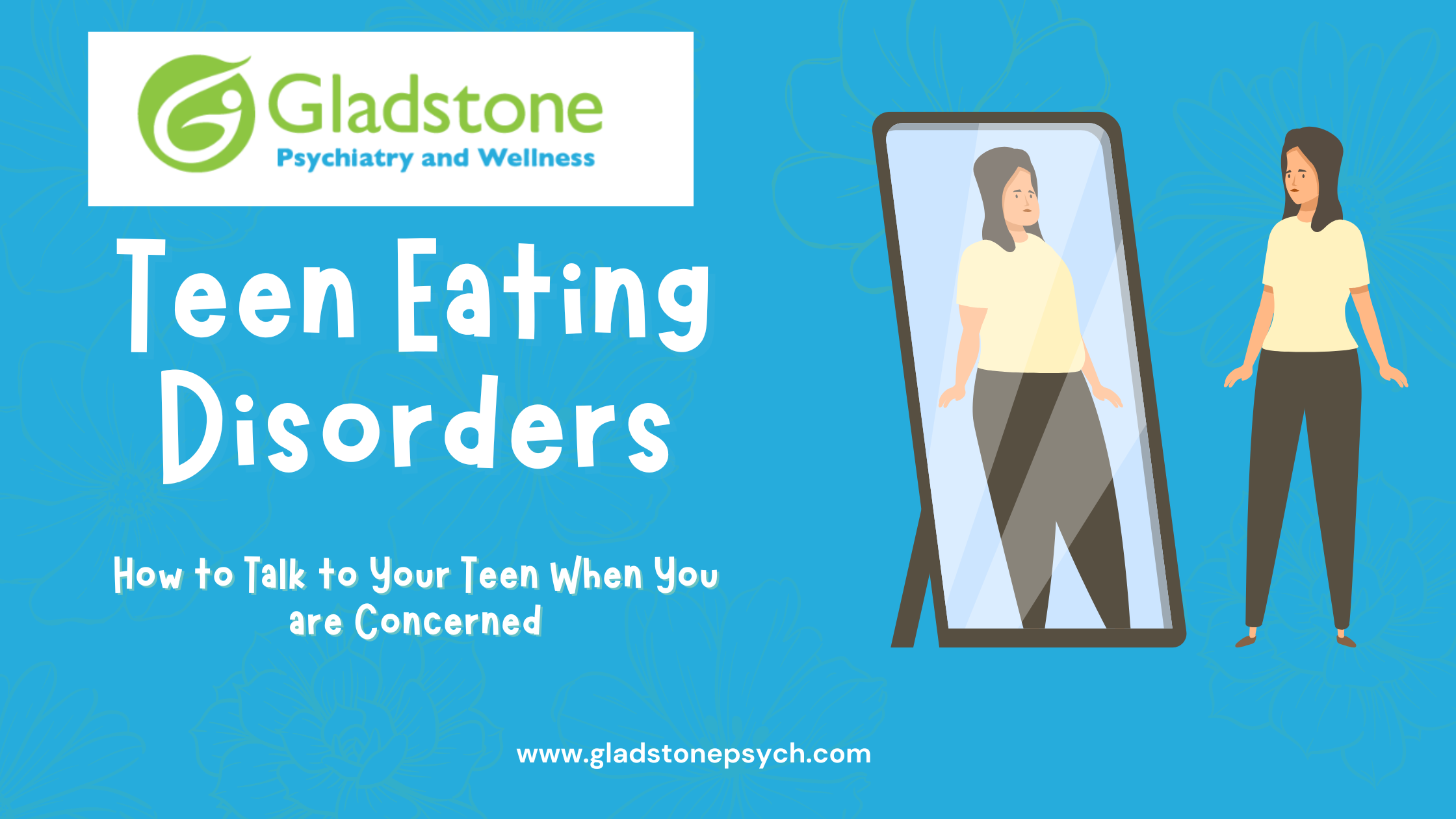
Teen Eating Disorders: How to Talk to a Teen You’re Worried About
If you’ve read our post on the warning signs of teen eating disorders and recognized some of them in your own child, you may be sitting with a hard question: now what do I actually say?
It’s one of the most common places parents get stuck. You don’t want to make things worse, you don’t want your teen to shut down or shut you out, and you’re not sure if what you’re seeing is a phase or something more serious. This post is a companion to that earlier piece, focused specifically on the conversation itself. How to start it, what to say, and what to avoid.
Start From a Place of Concern, Not Accusation
The goal of this first conversation isn’t to diagnose your teen or to get them to admit anything. It’s to open a door. Teens are far more likely to engage when a conversation starts from care rather than confrontation.
Instead of leading with observations about food or weight, try leading with what you’ve noticed about them as a person. Think about their mood, their energy, and how they seem lately. A teen eating disorder is rarely just about food. It’s often tied up with anxiety, perfectionism, control, or difficult emotions, so starting there can feel less threatening than starting with a plate.
Some ways to open the conversation:
- “I’ve noticed you seem more stressed/withdrawn lately, and I wanted to check in.”
- “I care about you, and I’ve noticed some changes that are worrying me. Can we talk?”
- “You don’t have to have answers right now. I just want you to know I’m paying attention and I’m here.”
Choose the Right Time and Place to Talk About Teen Eating Disorders
Timing matters more than most parents expect. Conversations about possible teen eating disorders tend to go better when:
- You’re not at the dinner table or anywhere food is present
- Neither of you is rushed or distracted
- It’s private, not in front of siblings or friends
- You’re both reasonably calm, not in the middle of an argument
If your teen isn’t ready to talk the first time you bring it up, that’s okay. Planting the seed and revisiting it later is often more effective than pushing for a single, complete conversation.
What to Avoid Saying
Certain invalidating comments, even well-intentioned ones, tend to backfire:
- Comments about weight or appearance, positive or negative (“You look so healthy now” can land as “you looked unhealthy before”)
- Ultimatums or threats
- Comparing them to siblings or peers
- Minimizing (“I’m sure it’s nothing” or “just eat something”)
- Trying to solve it in one conversation
Teens with disordered eating patterns are often highly attuned to how others perceive their body, so even a compliment about appearance can reinforce the belief that their worth is tied to how they look.
What to Say Instead
- “I’m not trying to control what you eat. I’m trying to understand how you’re doing.”
- “This isn’t about getting in trouble. I want to help.”
- “You don’t have to figure this out alone.”
- “What’s been going on with you lately?”
Keep the focus on connection and curiosity rather than immediate correction. Your teen doesn’t need you to have the answers in this first conversation. They need to know you’re a safe person to bring the hard stuff to.
Listen More Than You Talk
It can be tempting to fill silence, especially when you’re anxious. But this conversation works better as a space for your teen to talk, even if what comes out is incomplete, defensive, or nothing at all.
If they deny anything is wrong, you can still let them know you noticed something and that the door is open. You don’t have to resolve everything in one sitting.
Teen Eating Disorders: When to Involve a Professional
A single conversation is rarely the whole solution, and that’s expected. If you’ve noticed the signs we outlined in our earlier post, like changes in eating patterns, preoccupation with food or body image, withdrawal, or physical signs of concern, the next step is connecting your teen with a professional who specializes in adolescent eating disorders.
A pediatrician is a reasonable first stop for a physical check, and a therapist experienced in treating teen eating disorders can help assess what’s happening and recommend a level of care. Early intervention tends to lead to better outcomes, so it’s worth reaching out even if you’re not fully certain what you’re seeing rises to that level.
You Don’t Have to Get It Perfect
Many parents hold off on saying anything because they’re afraid of saying the wrong thing. But an imperfect conversation started with care will almost always do more good than silence. Your teen doesn’t need you to say the perfect thing. They need to know you noticed, you care, and you’re not going anywhere.
Getting Support for Teen Eating Disorders
If you’re concerned about a teen eating disorder, Gladstone Psychiatry and Wellness offers assessment and treatment for adolescents across our Maryland locations. Reaching out for a professional opinion doesn’t commit you to anything, it just gets you information and a plan.
If you or your teen need immediate support, the National Alliance for Eating Disorders helpline is available for guidance and referrals.
Gladstone Psychiatry and Wellness provides eating disorder assessment and treatment for teens and families across our Baltimore, Hunt Valley, Columbia, Bethesda, and Frederick locations.
A note on this topic: eating disorders are a sensitive subject. If you or someone you know is personally struggling, please reach out to a mental health professional or a helpline for support.
